

Progress & Potential: A Taste of the Caribbean
25 Feb 2026
News
Agribusiness Investment Opportunities Exist in Suriname Today
As Caribbean nations confront rising food import bills, supply-chain disruptions, and growing demand for food security, agribusiness is one of the region’s most compelling and underdeveloped investment opportunities. Among Caribbean Association of Investment Promotion Agencies (CAIPA) countries, Suriname is an example of both the challenge and the potential.
With abundant land, water, and existing agricultural infrastructure, Suriname holds tremendous promise for how strategic investment, scale, and modernization could unlock regional food production and export growth.
“Opportunity in Suriname is substantial if approached correctly,” said Trevor Bullen, an independent agro-industrial consultant with more than four decades of global experience.
What is the Caribbean’s agricultural supply and demand model?
CAIPA represents a consumer market of roughly 44 million residents and 30 million annual visitors. Most of its representative nations are islands that, by definition, face constraints on land availability and water resources and therefore rely heavily on imports to meet basic food needs, creating a structural opportunity for regional producers. Only a handful of member states - Suriname, Guyana, and Belize - possess significant agricultural land and water resources.
“Only Suriname, Guyana, and Belize have land and water. Suriname has massive underutilized land,” Bullen notes.
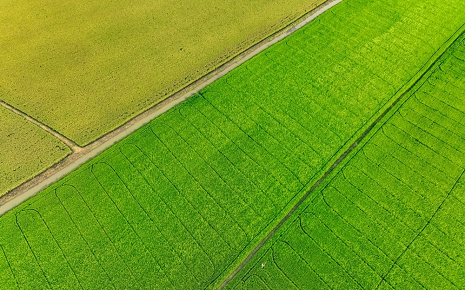
According to FAO estimates, Suriname has approximately 3 million hectares suitable for agriculture, of which 1.5 million hectares are arable. Yet today, only about 60,000 hectares are actively utilized. That gap represents both inefficiency and opportunity, particularly for investors willing to think at scale.
Why does scale matter in agribusiness investment?
One of the most consistent barriers to successful agribusiness investment in the Caribbean has been fragmentation. Small, disconnected producers often lack the scale required to attract capital, modernize operations, or compete in export markets.
“Agriculture needs to be revitalized, but one of the fundamental issues is scale,” Bullen explains. “People here are quite insular. There are very good people involved in agriculture, but they are all quite small.”
Labor constraints further complicate traditional agriculture in Suriname. Therefore, investment focus should be toward capital-intensive, mechanized, commercially integrated agribusiness models - the same models that have driven success in emerging agricultural markets globally.
“Anything labor-intensive is a non-starter from an investment perspective. You have to mechanize,” said Bullen.
Is infrastructure present, and is it properly utilized?
Contrary to common assumptions, Suriname does not lack agricultural infrastructure. In fact, much of it already exists, particularly in the rice sector, which dominates current production.
“Irrigation and drainage systems for rice, pump stations, canals, drains, seed production facilities, and water management organizations all exist,” Bullen explains. “They’re just underfunded or idle.”
That equates to a favorable environment for brownfield and hybrid investments, where upgrading and integrating existing assets can be more cost-effective than starting from scratch.
What investment themes make sense now?
Bullen highlights three agribusiness concepts with strong relevance not just for Suriname, but for the wider Caribbean:
- Edible oils (import substitution and export)
- Small ruminant (sheep and goats) protein production
- Modernized rice production and processing
Crucially, these projects are designed to demonstrate commercial viability within a relatively short timeframe. “Success breeds success,” Bullen said. “All three have import-substitution elements and export potential, and all should show success within three years.”
CAIPA-member Suriname Investment & Trade Agency (SITA) is also looking at opportunities for biofuel production using the country’s vast unused land, along with aquaculture driven by Suriname’s extensive river systems.
What path can Caribbean investors take with confidence?
Access to capital remains a critical bottleneck. Commercial banks across much of the Caribbean have historically favored imports and trade financing instead of agriculture.
“We need seed capital, an agricultural development bank, and proper project vetting,” said Bullen. “Additionally, there is untapped domestic capital sitting idle in the informal sector. A local fund could mobilize it.”
Beyond capital, confidence matters, especially for younger entrepreneurs and professionals entering the sector.
“Young people need to fail, learn, and improve,” Bullen says. “That’s how progress happens.”
Regional, not just national, opportunity
Suriname’s potential is not isolated. Its success or failure has implications for food security across the Caribbean. Countries that appeal to their strengths will succeed. In Guyana, that means oil; for Suriname, it's agriculture.
“In five to ten years, Suriname could supply 75% of the eastern Caribbean food needs,” Bullen argues.
The broader lesson for investors and policymakers is clear: agribusiness in the Caribbean is not about small projects or short-term wins.
“Agribusiness in Suriname is about scale, integration, mechanization, branding, confidence and long-term commitment,” said Bullen.
For investors willing to take that view, Suriname and the wider Caribbean offer fertile ground - contact CAIPA to get involved today.
More Topics

CAIPA at 42nd CANTO Conference
Feb 5 2026