From Potential to Proof: Revival in Spanish Town
23 Apr 2026
News
Jamaican Development Signals Transformational Growth in Caribbean Investment
For decades, economic conversations about the Caribbean have been dominated by tourism and natural resources. Beneath that narrative lies an often overlooked reality: the region possesses the raw ingredients for transformative, sustainable growth.
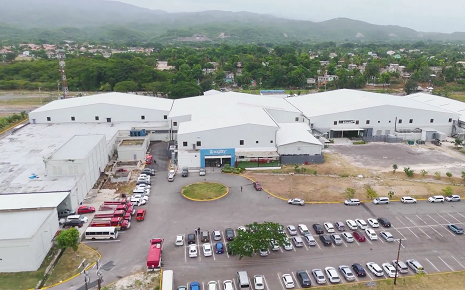
Moving beyond potential to proof has often been difficult. But today, that validation is on display at the MJS Industrial & Technology Park in Jamaica’s Spanish Town, a convincing case study of how to catalyze an entire region.
“People questioned a development in Spanish Town, but we chose to stop talking, start doing, and the results speak for themselves,” said Michael Subratie, the park’s Executive Chairman and Chief Executive Officer. “Today, with over 440,000 square feet developed and strong tenants in place, we’ve proven that private investment combined with smart government support works.”
Led by Subratie, the Musson Group, and P.B. Scott, the project represents a US$50 million private-sector investment that is transforming a dormant industrial relic into a modern hub for manufacturing, logistics, and technology-enabled services.
Vision builds momentum
Like many projects, MJS began with a single commitment.
“When our first tenant said, ‘I’ll take 100,000 square feet,’ that changed everything,” Subratie said. “After that, it was like a domino effect.”
Today, the park has a diverse and growing tenant base, which spans multiple sectors:
- Transparent BPO – Business process outsourcing
- Sagility – Healthcare and customer experience services
- InTouch CX – Contact center solutions
- Honey Bun Limited – Jamaican food manufacturing
- Jamaica Fire Brigade (Area 3 Headquarters) – Emergency services
- Office of Disaster Preparedness and Emergency Management (ODPEM) – National disaster coordination
- Phoenix Towers – Telecommunications infrastructure
Together, these tenants occupy approximately 440,000 square feet, with the park nearing full occupancy.
A major international manufacturer has already committed to 100,000 square feet in the next expansion phase, signaling continued momentum.
From industrial decline to strategic renewal
The MJS Industrial & Technology Park is a strategic redevelopment of the former Ariguanabo Textile Factory site. After decades of dormancy driven by global competition, political uncertainty, and a shift toward service-based industries, the site had become emblematic of lost opportunity. Spanish Town itself, once Jamaica’s capital, had similarly been left behind as economic activity concentrated in Kingston.
But where others saw decline, Subratie and his partners saw potential.
“You had to really look through the bush to see what was there,” Subratie said. “But the structure was intact. It was overbuilt, solid, and full of potential.”
Instead of demolishing the past, MJS leveraged it. The original textile facility became the backbone of a 440,000-square-foot industrial park, with expansion currently underway toward nearly one million square feet. The adaptive reuse offers a blueprint for the Caribbean.
“We’ve basically been able to take what is there and build on top of it, which is certainly efficient,” Subratie said. “More importantly, it’s sustainable.”
The success of MJS is rooted in recognizing and activating other existing advantages. The park’s location can draw on a labor pool representing approximately 40% of Jamaica’s population. And the proximity to highways, ports, and a rehabilitated rail line supports both passenger and freight movement.
“If you live in Spanish Town, it’s a five-minute drive. From Portmore, maybe twelve minutes,” said Subratie. “Compare that to two and a half hours into Kingston, and our people can experience a completely different life.”
Model of policy foundations behind success
The MJS project did not happen in isolation, but rather as a product of deliberate national reforms that have reshaped Jamaica’s investment landscape. One supporting factor has been the unique role of the Jamaican government. Instead of acting as a financial partner, it was a strategic enabler focused on creating the conditions necessary for investment to succeed.
Jamaica’s Special Economic Zone (SEZ) framework is a significant segment of that environment. Designed to replace ad hoc incentives with transparent policies that encourage long-term investment and industrial clustering, the SEZ's primary attributes include:
- No General Consumption Tax (GCT) on locally purchased goods and services, like electricity and telephone.
- Two-way trade between zones and the local economy, with a zero rate on sales into the zones.
- Low headline Corporate Income Tax
Beyond the SEZ legislation, contributing factors include:
- Macroeconomic Stability: Debt-to-GDP reduced from ~130% in 2016 to ~68% in FY2024/25.
- Workforce Development: Training pipelines through national programs such as HEART/NSTA Trust
- Security Improvements: Targeted initiatives to reduce crime and restore investor confidence
- Energy Reform: Lower electricity costs through tax reductions and renewable energy expansion
Competitive differentiator
In a region dedicated to sustainable growth, MJS displays how Environmental, Social, and Governance (ESG) principles can be embedded into a project’s foundation.
“It wasn’t just about the building,” Subratie notes. “It was the sustainability, and especially the social impact, that resonated with international partners.”
Environmental: Approximately 65% of energy demand is met by solar power, with plans to further enhance sustainability.
Social: Perhaps the most encouraging outcome of the park’s creation is that it reinforces human capital as the Caribbean’s most valuable resource. The park is projected to generate between 2,500 and 5,000 jobs, with broader indirect economic benefits across the surrounding community.
Additionally, the MJS model is integrated with the nearby G.C. Foster College. Instead of operating in isolation, the park actively revitalized and incorporated the college’s facilities by restoring athletic infrastructure, enhancing shared spaces, and creating a campus-like environment that blends work, education, and lifestyle.
“We didn’t develop something separate from the community. We did it as an integral part of it,” Subratie says.
Governance: Transparent partnerships and alignment with national policy frameworks reinforce investor confidence.
Blueprint for regional growth
With expansion plans accelerating and demand from global tenants increasing, MJS is still only at the beginning of its trajectory. But its broader message is already clear, extending far beyond Jamaica.
Similar conditions exist across the Caribbean, apparent in underutilized industrial assets, increasing regional coordination and growing, youthful populations. The region is ripe for investment, and as MJS demonstrates, when capital, policy, and community align, the result is transformative.
“The key was simple,” Subratie said. “Do the right things that make sense…and keep going.”
Investors and partners looking to explore similar opportunities in the Caribbean can connect with the Caribbean Association of Investment Promotion Agencies (CAIPA) to learn more about regional incentives, success stories, and collaborative projects.
More Topics


Suriname’s Agricultural Moment Has Arrived
Feb 25 2026